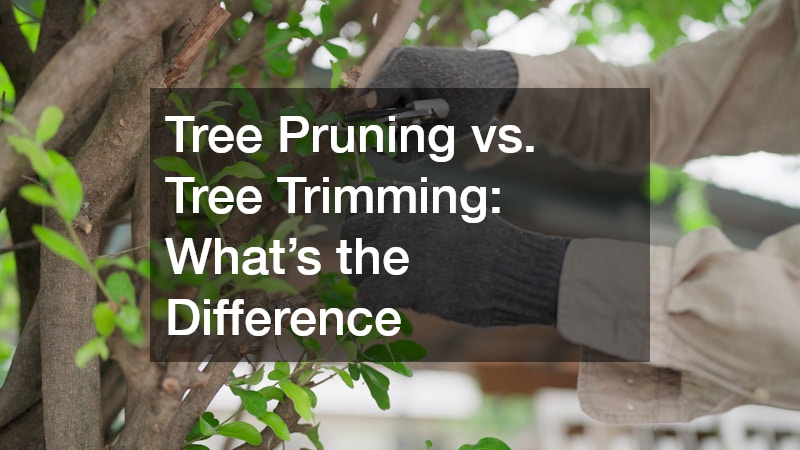
Understanding the distinction between tree pruning and tree trimming is essential for proper tree care. While both practices involve cutting away parts of the tree, the purpose and techniques differ significantly, impacting tree health and growth. Tree pruning involves the strategic removal of branches to enhance the structure and form of the tree, often focusing on removing dead or diseased branches to promote healthy growth.
On the other hand, tree trimming is more about maintaining the aesthetics and shape of the tree, ensuring branches do not become obstructive or overgrown.
Why is Tree Pruning Important?
Tree pruning is important because it promotes healthier growth and helps prevent disease. By removing dead or diseased branches, the tree can focus its energy on new, healthy growth. This not only extends the life span of the tree but also improves its ability to resist pests and harsh weather conditions. Moreover, proper pruning can prevent branches from becoming too heavy or entangled, reducing the risk of breakage during storms. In essence, routine pruning is a proactive measure to promote the overall well-being of the tree.
Aesthetically, pruning enhances the natural shape and structure of the tree. By guiding growth in specific directions, the tree can develop a balanced form that is both visually appealing and structurally sound. This can make a significant difference in the curb appeal of your property, making it more attractive and possibly increasing property values. Thoughtful pruning can also ensure that the tree complements the surrounding landscape design, increasing the harmony and aesthetic appeal of the space. This level of detailed attention highlights the beauty of your garden and ensures that the tree does not interfere with other plants.
Another crucial aspect of tree pruning is safety. Overgrown or dead branches can pose a significant risk, especially during heavy winds or storms. Pruning mitigates these risks by removing hazardous branches that could fall and cause property damage or injury. Regular attention to potential safety hazards is an invaluable investment in maintaining a safe environment around your home or public spaces. It ensures not only your safety but also the safety of those around you.
What Happens if You Don’t Trim Your Trees?
Neglecting to trim your trees can lead to a host of problems. A common issue is overgrown branches, which can block sunlight, crowd out other plants, and even damage buildings or other structures. When trees are not trimmed back, branches can interfere with power lines, posing a danger of electrical outages or fires. Unchecked growth can also lead to a tree developing imbalanced weight distribution, increasing the risk of falling during storms or heavy winds. Therefore, routine trimming is essential in preventing potentially hazardous situations and promoting a healthy environment.
Aesthetics is another factor impacted by neglect. Trees that are left to grow wildly can appear unkempt and unattractive, detracting from the overall appeal and value of your property. Overgrown branches can spiral out of shape, making trees resemble a wild mess rather than a well-maintained natural sculpture. Ensuring your trees are trimmed appropriately helps maintain the intended design and aesthetic of your landscape. By keeping a regular maintenance schedule, you preserve not only the health of your trees but also the beauty and orderliness of your property.
Can You Prune and Trim Trees Yourself?
While it is possible to prune and trim trees yourself, it requires a certain level of skill and knowledge. Understanding the proper techniques and timing is crucial to ensuring the health and vigorous growth of your trees. Beginner mistakes can lead to improper cuts or excessive removal of branches, which can harm the tree more than help it. Safety is also a significant concern, as trimming often involves ladders and potentially dangerous tools. If you choose to take on this task yourself, thorough preparation and research are essential to achieve favorable results.
Both tree pruning and tree trimming play vital roles in ensuring tree health and safety. Recognizing the differences and knowing when and how to apply these techniques can enhance your landscape and contribute to a safer environment. Regular upkeep not only boosts the visual appeal of your surroundings but also ensures that potential hazards are mitigated. Whether tackling the task yourself or hiring a professional, routine maintenance is imperative. Understanding the principles behind tree care will make a lasting impact on the vitality and safety of your trees.